Back to Ephemerides overview
· Ephemerides

Observation date

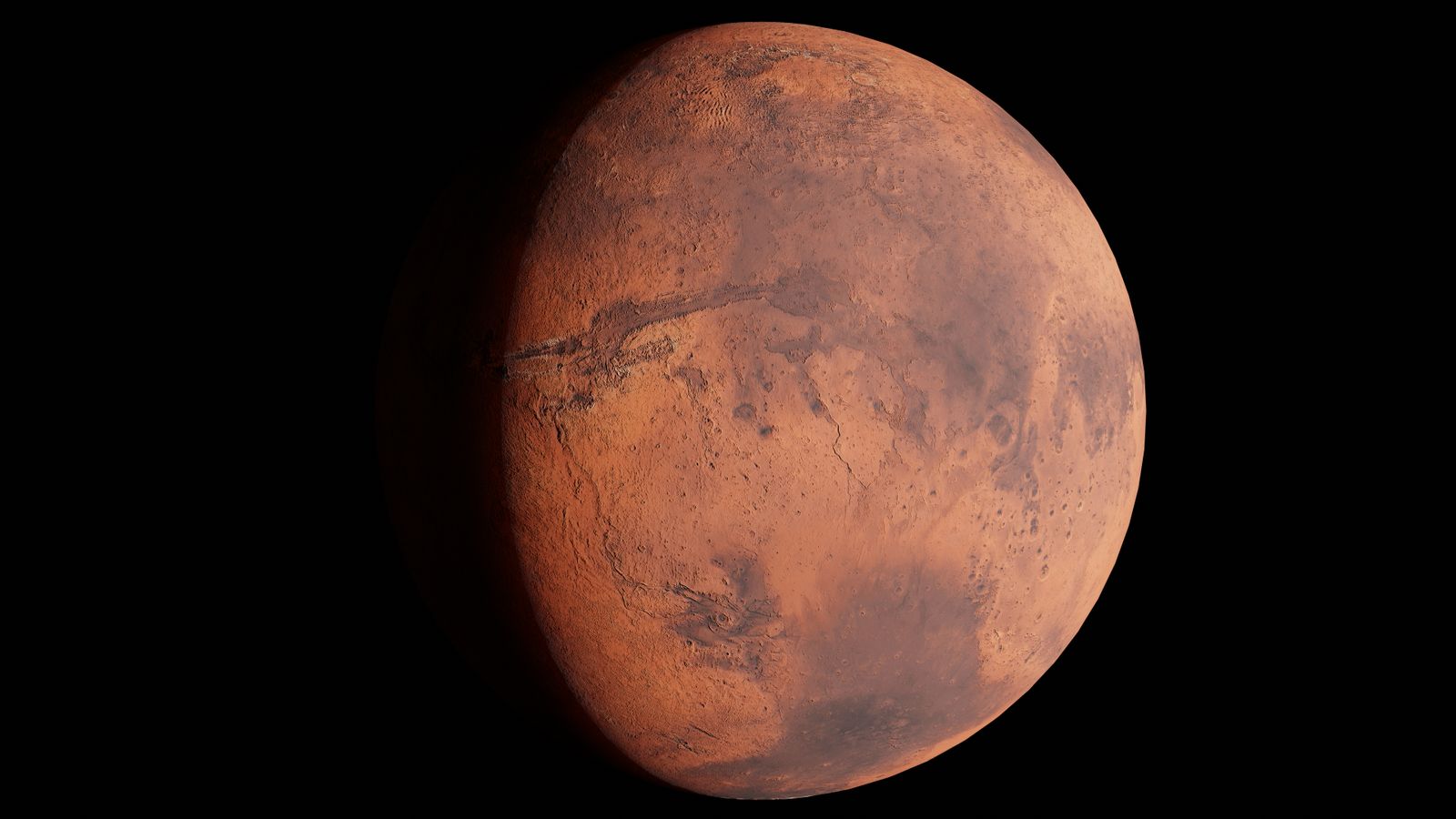
Mars

The fourth planet from the Sun; its red appearance comes from iron-oxide-rich dust.
AU
1.459
ECL
44.2°
MAG
1.31
Mars

01 — Current astronomical data

Parameters and context

Heliocentric distance
1.459 AU
Ecliptic longitude
44.16°
Ecliptic latitude
-0.18°
Apparent magnitude
1.31 mag
Right ascension
4 h 40 min
Declination
22.03°
Altitude above horizon
14.8°
Azimuth
73.1°

Astronomical overview

Mars has a thin atmosphere and clear evidence of past water-related processes.

It remains a major target for robotic missions searching for signs of ancient microbial life.

Astrological meaning

In astrology, Mars represents drive, initiative and response under pressure.

Mythology

The name comes from Mars, the Roman god often identified with the Greek Ares.

02 — 05

Key facts

  1. 01Olympus Mons is the tallest known volcano in the Solar System.
  2. 02Valles Marineris is one of the largest canyon systems known.
  3. 03Polar caps contain both water ice and dry ice.
  4. 04Multiple rovers have operated on Mars across several missions.
  5. 05Seasonal dust changes strongly affect observing conditions.

Parameters and context

Sidereal day
24 h 37 min
Solar day
24 h 39 min
Year length
687 days (~1.88 Earth years)
Rotation speed
868.0 km/h • 14.62°/h
Orbital speed
24.10 km/s
Distance from Sun
227.90 million km
Diameter
6,779 km
Gravity
3.7 m/s²
Mean temperature
-63 °C