Back to Ephemerides overview
· Ephemerides

Observation date

Saturn

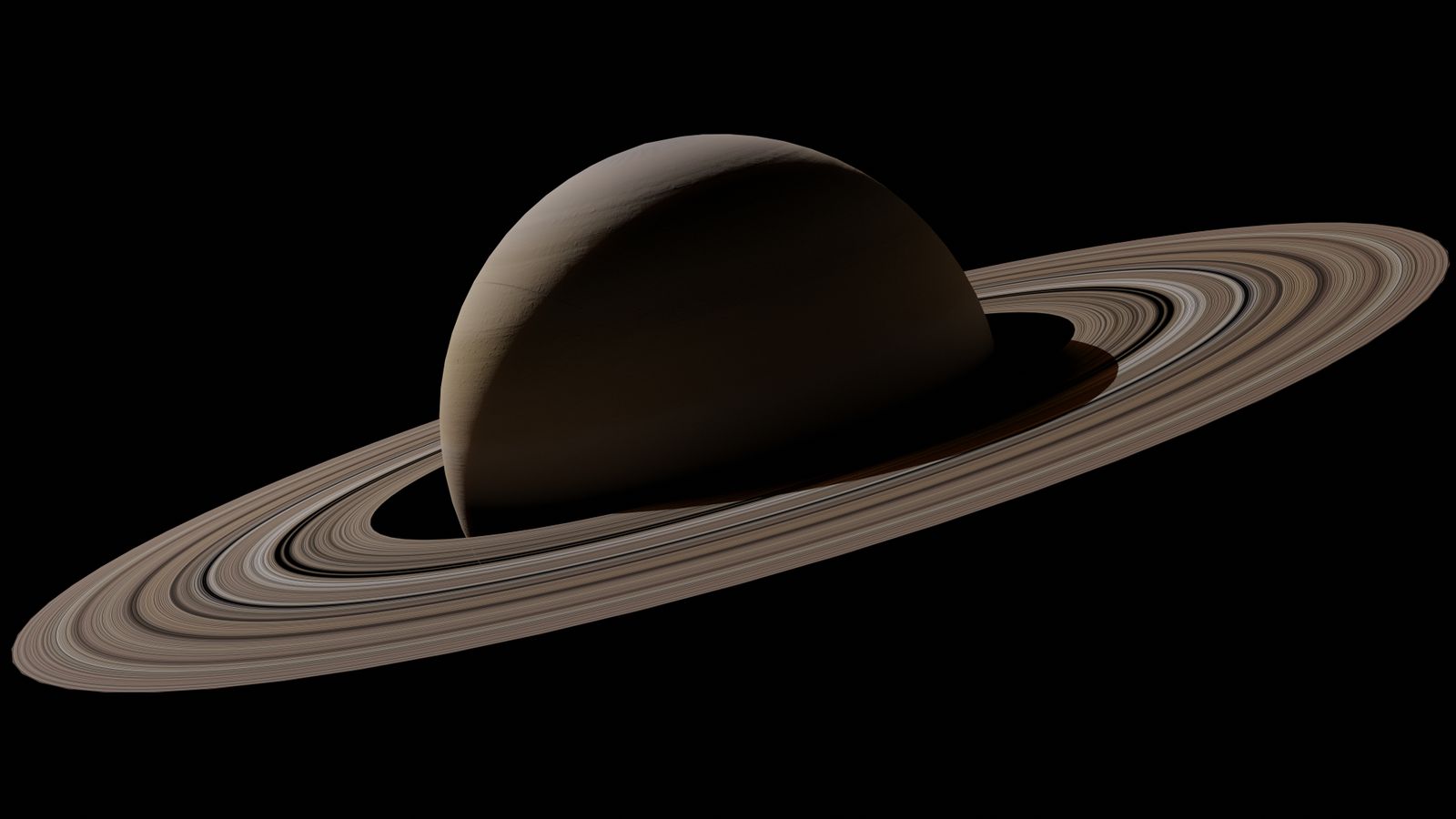
A gas giant famous for its broad ring system made mostly of ice and rocky particles.
AU
9.459
ECL
8.5°
MAG
0.60
Saturn

01 — Current astronomical data

Parameters and context

Heliocentric distance
9.459 AU
Ecliptic longitude
8.52°
Ecliptic latitude
-2.40°
Apparent magnitude
0.60 mag
Right ascension
0 h 58 min
Declination
3.51°
Altitude above horizon
31.8°
Azimuth
133.0°

Astronomical overview

Saturn has a very low average density and a complex ring structure divided into many bands and gaps.

It is one of the most striking telescopic targets.

Astrological meaning

In astrology, Saturn symbolizes structure, responsibility, boundaries and long-term discipline.

Mythology

Named after Saturn, the Roman god linked to time and cycles (Greek Cronus).

02 — 05

Key facts

  1. 01Its rings are split into several major divisions and gaps.
  2. 02Titan has a dense atmosphere and lakes of liquid hydrocarbons.
  3. 03A persistent hexagonal jet stream is observed near the north pole.
  4. 04Upper-atmosphere winds can exceed 1,500 km/h.
  5. 05Saturn emits more energy than it receives from the Sun.

Parameters and context

Sidereal day
10 h 34 min
Solar day
10 h 34 min
Year length
10,759 days (~29.46 Earth years)
Rotation speed
35,500.0 km/h • 34.07°/h
Orbital speed
9.70 km/s
Distance from Sun
1,433.50 million km
Diameter
116,460 km
Gravity
10.4 m/s²
Mean temperature
-140 °C